Services
Clinical Services at Ten

About TenClinical
Since 2012, Ten Health and Fitness has set out to bridge the gap between the fitness sector and the medical community.
TenClinical is the latest step in that process, providing bespoke exercise prescription for clients with an identified clinical need – specialising in those diagnosed with cancer, heart disease, diabetes or women’s’ health conditions. Through exercise therapy, we support the benefits of their treatment and improve the speed and quality of their recovery.
We have strong relationships with London’s leading hospitals, consultants, surgeons and clinical practices. Many of our clients are referred to us by them.
TenClinical exercise sessions are led by qualified and clinically experienced physical trainers, with fully integrated physiotherapy support.
Every client has a full clinical, functional and musculoskeletal assessment, which underpins the development of his or her individual programme. All sessions are closely monitored, with regular assessments to evaluate performance and measure improvement.
We’re also able to support referring surgeons, consultants and medical teams by providing them with detailed, quantified feedback on client progression and outcomes.
Outside their 1-1 sessions, clients have access to Ten’s in-house massage and physical therapy teams, along with nutritional guidance and mindfulness coaching to support them on their journey.
TenClinical is uniquely able to offer a rigorous clinical approach within a welcoming, supportive and empowering boutique environment, and, through our Circle of care, to enable clients to progress from illness through rehabilitation and clinical exercise to functional exercise and fitness.

Why TenClinical?
No other fitness provider in London is able to offer a comparable service.
Mainstream gyms, personal trainers and fitness providers generally lack the capability to deliver Clinical exercise. Gym staff are not qualified in or capable of working safely with clients whose conditions require specialist skills and training. Designed for ‘DIY’ workouts rather than expertly guided sessions, gyms typically lack our sustainable approach to exercise, level of trainer expertise and in-house Physio and Massage therapy and rehab capabilities.
In contrast, Ten has a in-depth of experience providing expertly taught guided sessions (whether classes or 1-1), and we offer a uniquely integrated and in-house Circle of Care, to support our clinical capability, along with a significantly more expert, personal, inclusive, supportive and welcoming experience.
TenClinical is not the only provider of Clinical exercise in London; there are also a number of specialist single-clinic practices. While we share their rigorous clinical approach, ours is delivered within a welcoming and empowering boutique environment. In addition, for clients progressing from clinical to more functional exercise we have the ‘downstream’ skills in-house that they lack. In fact, we’re already providing 500 hours a week of expertly-taught, highly effective and sustainable exercise sessions to a broad range of ages and abilities.
Lastly, with 10 Studios throughout London we’re more readily accessible to clients wherever they live and/or work.
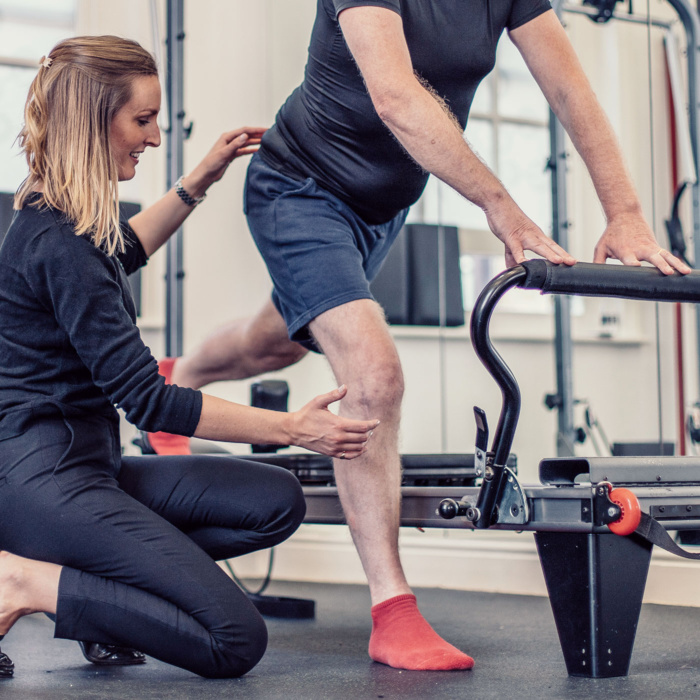
What’s Clinical Exercise?
Clinical exercise differs from standard personal training sessions in a number of ways, the most fundamental being that goals are dictated by the client’s needs rather than their wants.
So rather than being about aesthetics, weight loss or running the marathon in under 4 hours, the first priority is client safety, with sessions designed around proven scientific and medical principles to help clients manage a life-changing condition and improve quality of life.
Unlike normal personal training, collaboration and information sharing with the clients’ consultant is ongoing, along with frequent measurement and evaluation of baseline clinical indicators, especially blood pressure, resting heart rate, body weight/composition and blood glucose/cholesterol.
Each condition requires a different approach. For example:
- With cardiac issues, continual measurement – and more importantly, management – of heart rate is paramount, so it’s measured every 2 minutes during sessions.
- With oncology clients, there’s more focus on resistance work to build lean muscle, proven to improve resilience before, during and after chemotherapy and other treatments. In addition, session content and approach are tailored to fit the fatigue stages of treatment cycles.
- For clients going through or post menopause, key areas of emphasis are on blood pressure management, and on optimising the effectiveness of resistance work to combat the body’s reduced ability to generate lean muscle.
- For diabetes sufferers, there are strong links between diabetes, difficulty in managing weight and coronary heart disease. So for safety, glucose readings are taken at the start and finish of every session. Additionally, sessions are tailored to ensure that exercise is conducted in the ‘fat burning zone’ (utilising energy from fat lipids rather than glucose or glycogen). The higher body mass that frequently accompanies diabetes puts undue pressure on bones, ligaments and joints. As a result, sessions also focus on injury prevention – correcting compensatory movement patterns and encouraging safer, more functional patterns.
All sessions are totally bespoke in every detail.
Medication can affect the way the body tolerates exercise, so clients’ prescription, dosage, and frequency are incorporated into session planning and programming. As are external factors that can impact either clinical symptoms or physical capability – including client lifestyle, external stress levels, and mood.
Even environmental influences like music, lighting and behaviours are tuned to maximise the benefit from each session.
Our Specialisms
-
– Oncology
2.5 million people are living with cancer in the UK, with numbers predicted to rise to 4 million by 2020 (Source: Macmillan)
Studies show that prescribed physical exercise can reduce recurrence risk, decrease fatigue and improve physical fitness and quality of life in cancer patients throughout treatment and afterwards.
During cancer treatment, exercise releases endorphins which improves mood and as well as helping reduce some of the side effects of treatment. Afterwards, it can help to recover physical function as well as reducing the risk of cancer reoccurring, and other long-term conditions developing (heart disease being one of the more common), by 40% to 50%. (Source: National Cancer Institute).
-
– Cardiac
7 million people in the UK are living with cardiovascular disease. Of those, 2.3 million people are living with coronary heart disease. Cardiovascular disease is responsible for 25% of all deaths per year. (Source: British Heart Foundation)
Hypertension (high blood pressure) is one of the most common medical disorders, associated with an increased incidence of cardiovascular disease.
Exercise is a cornerstone therapy for the primary prevention, treatment, and control of hypertension, particularly cardiovascular training. Aerobic exercise lowers resting blood pressure and heart rate for up to 22 hours post exercise as well as stimulating fat loss, which reduces strain on the heart and circulatory system, which can result in a reduction in prescribed medications.
In addition, a combination of aerobic exercise and resistance training helps to build muscle mass and boost metabolic rate, again aiding weight loss and reducing dependency on medication.
Cardiac Rehab
Cardiac rehabilitation is increasingly recognised as an integral component of care for patients with cardiovascular disease and is an important tool in secondary prevention of the disease (i.e., reducing impact, preventing complications and reducing the risk of future recurrence).
Our Cardiac specialists have a breadth of experience creating bespoke, evidence-based and clinically proven rehab programmes to help clients following a cardiovascular disease diagnosis.
We take a holistic approach, addressing the mental and emotional impact of a life-altering diagnosis as much as the physical challenges. We support referring surgeons, consultants and medical teams by providing them with detailed, quantified feedback on client progression and outcomes. And we provide access to Ten’s integrated and multi-disciplinary Circle of Care to support clients on their journey. Read more about Cardiac Rehabilitation.
-
– Diabetes
4.5 million people in the UK have diabetes, an increase of 60% in the last decade, with numbers expected to top 5 million by 2035. (Source: Public Health England, Diabetes UK).
Diabetes is now the fastest growing health threat of our time, and one of the top 10 causes of death in first world countries. However, more positively exercise has been proven to have both acute (short term) and chronic (long term) influence on those sufferers. Over time, it can can result in a reduction in diabetes-related medication as well as a reduction in the associated cardiovascular risk factors.
-
– Menopause
30% of the female population – that’s 13 million women in the UK alone – are going through or are in menopause. (Source: MenopauseUK)
A natural part of the ageing process, Menopause affects women in many different ways, some of the most common being hot flushes, difficulty in weight-management and increased levels of fatigue. It has also been associated with increased susceptibility to clinical disease.
Two major concerns are the rise in atherosclerosis (a narrowing of the arteries due to the build up of plaques that can result in coronary artery disease, stroke, peripheral artery disease or kidney problems) and increases in the body’s bad cholesterol levels (LDL) combined with a decrease in good cholesterol (HDL).
Exercise and nutritional focus have been seen to be beneficial by slowing such effects during the transition through menopause, and afterwards. It is particularly effective at lowering levels of bad cholesterol and triglyceride (fat molecules carried in the blood that can increase the risk of heart disease at high levels), along with supporting weight management and reducing waist-to-hip ratios.
TenClinical works closely with leading Harley Street consultant Nick Panay, whose Hormone Health clinic provides medical support and treatment options to clients with with a range of menopause and hormone related conditions.
-
– Cholesterol & Cardiac Risk Testing
Whether you have set yourself specific fitness or nutritional goals, are living with a significant clinical condition, or simply want to take a couple of simple prehabilitative steps to help you live healthier for longer, there are some key markers that all of us should be aware of.
These include:
- Total Cholesterol
- High-density Lipoprotein
- Low-density Lipoprotein
- Triglycerides
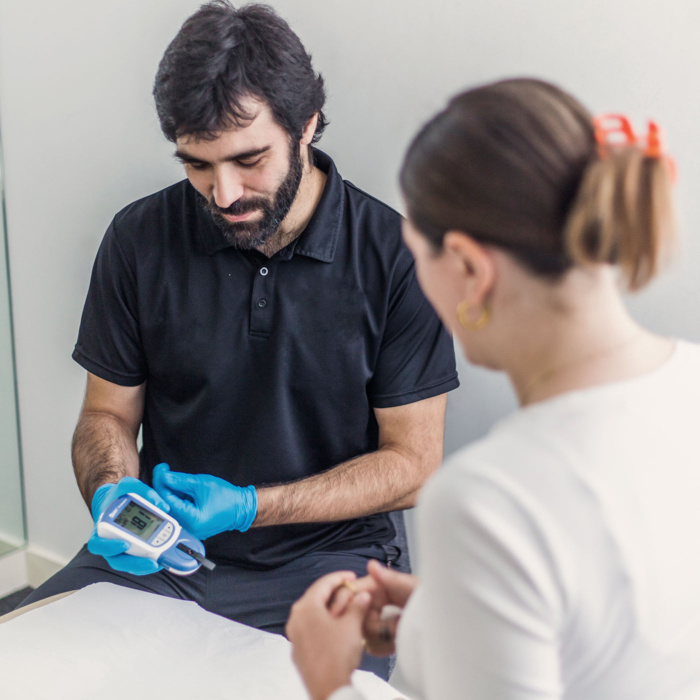
- Cardiovascular Risk FactorsThe good news is that these can all be assessed with one quick and simple test. Ten’s Blood Lipid Profile test.
All it requires is a drop of blood (usually from a finger prick) and takes just 15 minutes.
We’ll email you the results within a day or two.
The report will detail your blood lipid results together with your recommended ranges for comparison. It will also give you a 10-year cardiac risk assessment, along with recommended actions, where necessary.
-
– Coronavirus Recovery
Ten’s Coronavirus Recovery programme is an evidence-driven, clinically proven recovery and rehabilitation programme. It is designed to help reduce the impact of Long Covid symptoms and help you recover faster.
If you have had Coronavirus and are now virus-free but are still experiencing symptoms, you are welcome to join the TenClinical Coronavirus Recovery programme.
Our Clinical Centres
NOTTING HILL
Ten Health & Fitness
2-4 Exmoor St
London W10 6BD
020 8969 9677
[email protected]
NOTTING HILL GATE
Ten Health & Fitness
94 Notting Hill Gate
London W11 3QA
020 7221 9090
[email protected]
CHISWICK
Ten Health & Fitness
Barley Mow Centre
London W4 4PH
020 8996 1710
[email protected]
ST JAMES'S
Ten Health & Fitness
6 Duke Street St James's
London SW1Y 6BN
020 7930 4442
[email protected]
FITZROVIA
Ten Health & Fitness
83 Great Titchfield St
London W1W 6RH
020 7637 0555
[email protected]
HATTON GARDEN
Ten Health & Fitness
36-38 Hatton Garden
London EC1N 8EB
020 7404 8132
[email protected]
CITY (LIVERPOOL ST)
Ten Health & Fitness
119-121 Middlesex St
London E1 7JF
020 7247 8895
[email protected]
KING'S CROSS
Ten Health & Fitness
Gasholders 11
1 Lewis Cubitt Walk
London N1C 4BX
020 7493 7858
[email protected]
Meet the Team
You’ll find in-house Clinical Exercise Physiologists at all our West, Central and East London Studios. Expert and highly qualified, they’re chosen as much for their warm, genuinely caring attitude and positive approach as for their expertise.
THINGS TO CONSIDER
HOW TO GET STARTED
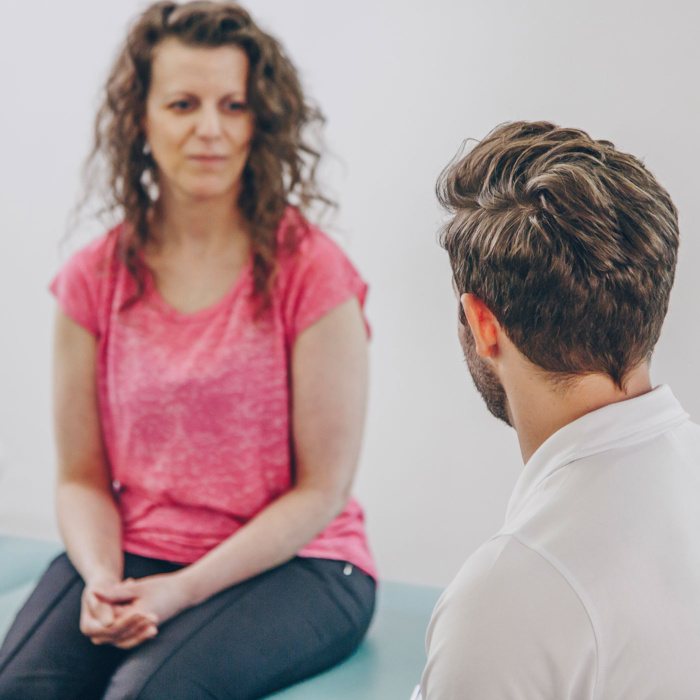
When it comes to Clinical Exercise Prescription, it’s essential that you start with our comprehensive assessment. This session is designed to help us evaluate your condition, your current fitness levels and movement patterns, and to ensure we fully understand other challenges you may be facing.
The assessment will allow our Clinical Exercise Physiologists to use data-driven insights to create a plan for your unique needs, ensuring it's both safe and effective for your condition. You'll also receive guidance on what to expect throughout your sessions, including the pace, progression, and how the exercises can help improve your quality of life.
Fees
For Cardiovascular or Pulmonary conditions, please book our Cardiac Rehab Assessment. For all other conditions please book our Clinical Exercise Assessment. If you are unsure, which session is right for you, please fill out the enquiry form below.
FAQ
GOT QUESTIONS?
WE’VE GOT ANSWERS!
Still have questions? Read our full FAQs or contact our team, and we'll be happy to assist
-
What is Clinical Exercise at Ten?
Clinical Exercise at Ten is a bespoke, evidence-based exercise programme designed for people with a diagnosed medical or health condition.
Unlike standard fitness or personal training, Clinical Exercise is prescribed around clinical need, safety and long-term health outcomes. Every programme is informed by medical science, delivered by clinically trained specialists, and supported by our integrated Physiotherapy and Massage teams.
Our aim is simple: to help you recover well, move safely and improve your quality of life.
-
Who is Clinical Exercise for?
Clinical Exercise is suitable for people who have been diagnosed with, or are managing, conditions such as:
- Cancer
- Heart disease or cardiovascular conditions
- Diabetes
- Menopause-related health changes
- Long Covid
- Elevated cholesterol or increased cardiac risk
You don’t need to be “fit” to start - programmes are built around where you are now.
-
How is Clinical Exercise different from Personal Training?
Personal Training is typically goal-led (strength, fitness, performance).
Clinical Exercise is needs-led, with safety as the first priority.
Sessions are designed around:
- Medical history and diagnosis
- Medication and treatment plans
- Clinical indicators such as heart rate, blood pressure or glucose
- Evidence-based protocols specific to your condition
Progression is carefully monitored and measured, rather than pushed.
-
Do I need a referral from my consultant or GP?
No, you don’t need a referral to book an assessment.
However, many of our clients are referred to us by consultants, surgeons and hospitals. Where appropriate, we actively collaborate with your medical team and provide structured feedback on your progress and outcomes.
-
What happens in the initial Clinical Exercise assessment?
Your initial assessment is a comprehensive session designed to give us a full picture of your health, movement and needs.
It includes:
- Review of your medical history and diagnosis
- Clinical and functional assessments
- Musculoskeletal and movement analysis
- Discussion of symptoms, concerns and goals
This assessment underpins the design of your bespoke exercise programme and ensures everything we do is safe, appropriate and effective.
-
Which assessment should I book?
- If you have a cardiovascular or pulmonary condition, book the Cardiac Rehab Assessment
- For all other conditions, book the Clinical Exercise Assessment
If you’re unsure which is right for you, our team will guide you, simply complete the enquiry form and we’ll help you decide.
-
What happens after my assessment?
Following your assessment, your specialist will:
- Design a personalised Clinical Exercise programme
- Recommend the appropriate frequency and session structure
- Discuss realistic progression and outcomes
- Explain how your programme will be monitored and adapted over time
You’ll then continue with 1:1 follow-up sessions, supported by regular reassessment.
-
How are sessions monitored for safety?
Safety is central to everything we do.
Depending on your condition, sessions may include:
- Regular heart rate monitoring
- Blood pressure checks
- Blood glucose readings
- Close observation of fatigue and recovery
Your medication, treatment stage and lifestyle factors are all considered when planning and delivering sessions.
-
Can Clinical Exercise help during or after cancer treatment?
Yes. There is strong evidence that prescribed exercise can:
- Reduce fatigue
- Improve physical function
- Support recovery
- Reduce recurrence risk
Our Oncology specialists tailor sessions carefully around treatment cycles, energy levels and side effects, creating a supportive and empowering environment throughout.
-
How does Cardiac Rehabilitation work at Ten?
Cardiac Rehabilitation at Ten is delivered by specialists experienced in working with cardiovascular conditions.
Sessions focus on:
- Safe heart rate management
- Improving cardiovascular efficiency
- Building confidence in movement
Heart rate is closely monitored throughout sessions, ensuring exercise remains within safe and effective ranges.
-
What is Cholesterol & Cardiac Risk Testing?
Our Blood Lipid Profile test provides a detailed assessment of:
- Total cholesterol
- Lipoproteins
- Triglycerides
It’s a simple test requiring only a drop of blood and usually takes around 15 minutes. You’ll receive a detailed report outlining your 10-year cardiac risk, along with recommended actions where appropriate.
-
Can Clinical Exercise support menopause and diabetes?
Yes.
For menopause, programmes focus on:
- Blood pressure management
- Resistance training to support muscle and bone health
- Fatigue and weight-management support
For diabetes, sessions are designed to:
- Manage blood glucose safely
- Improve insulin sensitivity
- Reduce cardiovascular risk
- Minimise joint stress and injury risk
All programmes are carefully monitored and adapted over time.
-
Can I use other Ten services alongside Clinical Exercise?
Absolutely, this is one of Ten’s key strengths.
Clients have access to:
- Physiotherapy
- Massage Therapy
- Wellness recovery
- Dynamic Reformer Pilates
- Classical Equipment Pilates
This integrated Circle of Care ensures everything works together to support your recovery and long-term wellbeing.
-
Where does Clinical Exercise take place?
Clinical Exercise sessions are delivered across Ten’s London studios, making them accessible wherever you live or work.
With locations across London, we’re able to support continuity of care as you progress.
-
Why choose TenClinical?
Because no other provider combines:
- Clinical rigour
- Exercise expertise
- Integrated in-house services
- A welcoming, non-clinical environment
- City-wide accessibility
We bridge the gap between healthcare and fitness, supporting clients from diagnosis, through rehabilitation, and back into confident, functional movement.